Understanding the Reasons Behind Age Spots Getting Bigger
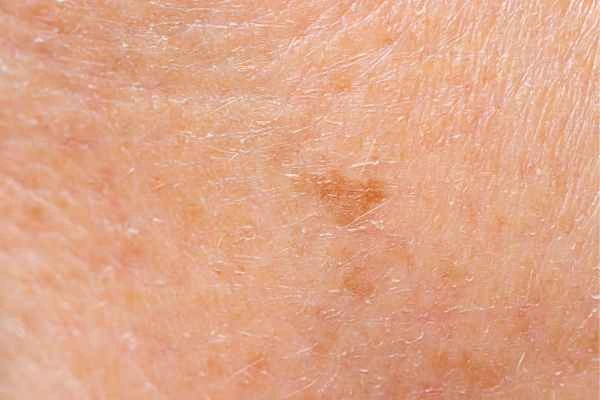
The Causes of Age Spots Getting Bigger
- Sun Exposure: One of the primary causes of age spots increasing in size is sun exposure. Over time, the ultraviolet (UV) rays in sunlight can cause damage to the skin, leading to the development of age spots.
- When the skin is exposed to the sun, it produces more melanin, the pigment that gives the skin its colour. This excess melanin can cause existing age spots to become darker and new ones to form.
- Age: As we age, our skin undergoes natural changes that can make age spots more noticeable.
- The skin becomes thinner and loses its elasticity, making it more susceptible to damage from the sun’s UV rays. Additionally, the body’s natural ability to repair and regenerate skin cells slows down, which can contribute to the growth of age spots.
- Hormonal Changes: Hormonal changes can also contribute to the development and growth of age spots. For example, women may notice age spots appearing or increasing in size during pregnancy or menopause, when hormone levels are fluctuating.
- Genetics: Some individuals may be more prone to developing age spots due to their genetic predisposition. If you have a family history of age spots, you may be more likely to develop them and experience them increasing in size over time.
FAQs: Why Do Age Spots Sometimes Get Bigger?
Q1: Can age spots actually grow or expand over time?
A: Yes. Although age spots often start as small flat patches of pigmentation, many do gradually enlarge, darken, or coalesce (merge) over time. This happens because the underlying processes that created them (such as UV damage and pigment accumulation) continue acting.
Q2: What biological mechanisms cause an age spot to increase in size or depth?
A: Several interacting mechanisms contribute:
- Continued UV damage & melanocyte stimulation — Further sun (or UV) exposure triggers melanocytes (pigment-producing cells) to produce more melanin, which can spread into adjacent skin regions.
- Cellular ageing/senescence effects — As skin ages, repair mechanisms (DNA repair, antioxidative defences) weaken, allowing damage to accumulate. In “age spot” regions, pigment may accumulate more readily and spread over time.
- “Misrepair” accumulation hypothesis — Some theories propose that aged cells containing pigmented waste (lipofuscin) may influence neighbouring cells to age prematurely, leading to expansion of pigmented clusters.
- Local spread of pigment/coalescence — Adjacent small pigmented freckles or lentigines may merge, giving the appearance of one larger spot.
Enlargement is a combination of pigment spreading, new pigment production, and structural skin ageing.
Q3: Are age spots more likely to grow in people with certain risk factors?
A: Yes — some factors make enlargement more likely:
- High cumulative sun exposure — The more UV exposure someone has had over the years, the higher the “pigment load” and risk of further growth.
- Fair / lighter skin — Less baseline melanin protection makes pigmentation effects more prominent and variable.
- Weakened repair/antioxidant systems — As we age, the ability of skin to repair UV damage or remove pigment irregularities declines.
- Genetic predisposition — Some individuals have a stronger tendency for pigment accumulation or weaker control of melanocyte regulation.
- Environmental / lifestyle stressors — Repeated inflammation, oxidative stress, or exposure to pollutants may exacerbate pigment spread in susceptible areas.
Q4: If an age spot is growing, does that always mean it’s dangerous?
A: No — many enlarging age spots remain benign (i.e. solar lentigines). However, any pigmented lesion that changes in size, shape, colour, or texture should be evaluated by a dermatologist or skin specialist.
Red flags to watch out for include:
- Asymmetry or irregular border
- Multiple colours or darkening
- Rapid growth
- Bleeding, itching, or crusting
- Evolution over weeks to months
These features might point to more serious conditions like melanoma or dysplastic lesions, so professional assessment is wise. Use Cryopen treatment to remove blemishes safely. They are FDA-approved.
Q5: When an age spot “gets bigger,” is that purely in two dimensions (wider), or can it also become more raised/protruding?
A: Both can happen. Initially, many age spots are flat and grow laterally (spread outward). Over time, in some cases, they may become more raised or thicker, developing a slight relief or protrusion.
The theoretical “misrepair / lipofuscin accumulation” model suggests that when some cells die and release pigmented waste, the body may encapsulate them, contributing to vertical growth (thickness).
However, this raised version is less common and occurs more slowly than lateral growth.
Q6: How fast can an age spot grow?
A: Growth is typically slow, over months to years. Most spot enlargement is gradual because pigment changes and cell ageing progress slowly. The speed depends on individual susceptibility, UV exposure, and skin repair capacity.
If you notice rapid growth (within a few months or less), that is a stronger reason to seek a medical evaluation, as sudden changes are atypical for benign age spots.
Q7: Can treatments prevent age spots from getting bigger, or reverse growth once it has occurred?
A: Yes — many treatments aim to reduce pigment, flatten spots, or inhibit further spread. Some common approaches:
- Topical agents (e.g. retinoids, hydroquinone, vitamin C) to lighten pigment.
- Chemical peels or exfoliating therapies to remove superficial pigmented layers
- Laser / IPL / light-based therapies to target pigmented cells
- Cryotherapy/freezing methods to destroy pigmented cells locally
- Sun protection / UV avoidance to prevent further stimulus for growth
Although treatments can halt or reverse growth, no method guarantees permanent prevention — ongoing protection is essential.
Q8: What should someone do if they notice their age spots are getting larger?
A: Practical steps to take:
- Monitor and photograph — Keep a visual record (in the form of photos) of any changes over the course of weeks or months.
- Seek professional assessment — A dermatologist or qualified skin clinician should evaluate the lesion, especially if changes are rapid or show red flags.
- Adopt aggressive sun protection — Use broad-spectrum sunscreen, avoid peak UV times, wear protective clothing.
- Consider early treatment — If the spot shows signs of enlarging, earlier intervention often leads to better cosmetic results and easier removal.
- Regular skin checks — Including self-examination and professional skin screening.
Preventing and Treating Age Spots
While age spots are generally harmless, they can be unsightly and make you feel self-conscious.
To prevent age spots from getting bigger or forming in the first place, it’s essential to take steps to protect your skin from sun damage.
Here are some tips to keep in mind:
- Wear protective clothing, such as hats and long sleeves, when you’re outside in the sun.
- Apply sunscreen with an SPF of at least 30 every day, even if it’s cloudy outside.
- Avoid tanning beds and sun lamps, which can be just as damaging to the skin as natural sunlight.
- Use skincare products that contain antioxidants and other beneficial ingredients, such as vitamin C and retinol, to help repair and protect your skin.
If you already have age spots and want to reduce their appearance or prevent them from worsening, several treatment options are available.
These include:
- Topical creams and serums containing hydroquinone, retinoids, or glycolic acid can help lighten age spots over time.
- Cryotherapy, a procedure in which age spots are frozen with liquid nitrogen, causing the top layer of skin to peel off and the spots to fade.
- Laser therapy, which uses intense pulsed light (IPL) to break up the pigment in age spots, causing them to fade gradually.
If you’re concerned about age spots or any other skin issues, consult with a dermatologist to determine the best course of action for your specific needs.